Photography and Wellbeing: From Therapeutic Practices to Neuroarts
From the history of therapeutic photography to Still, We See exhibition and a new way of looking at this art medium
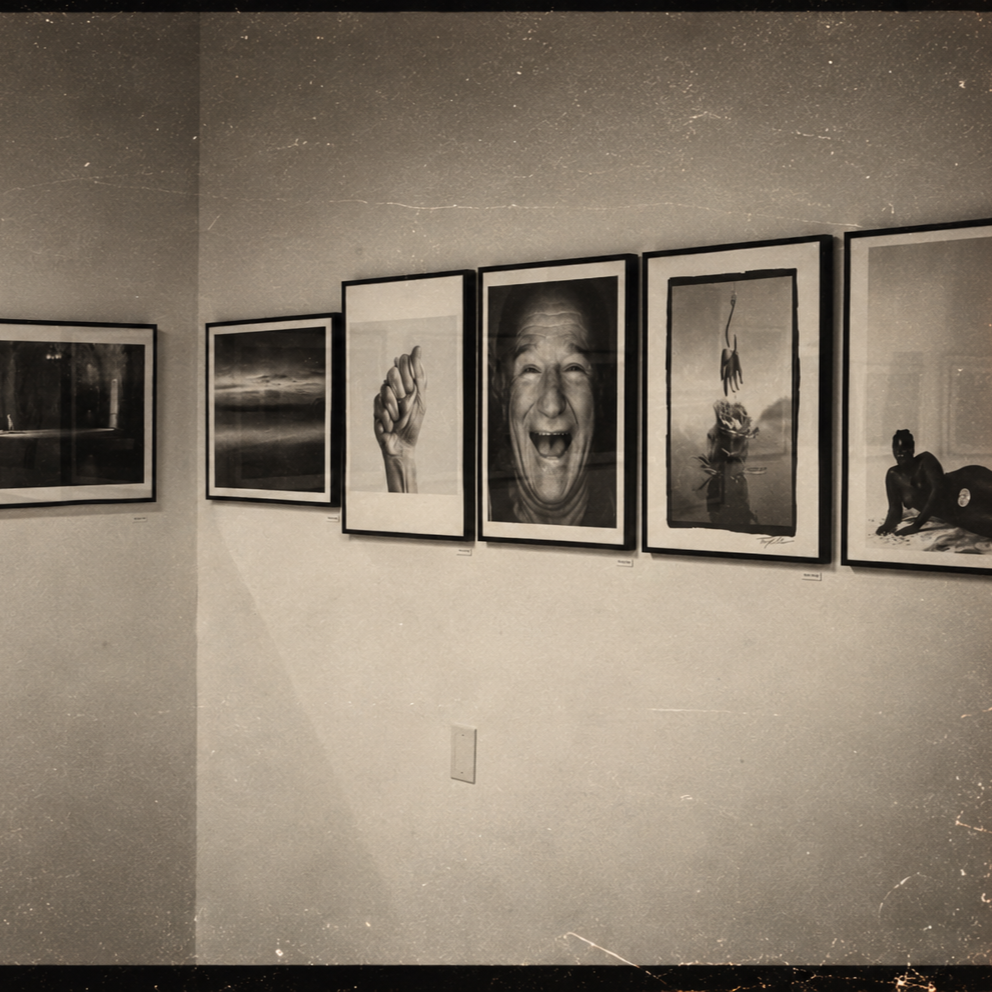
A sneak peek at
Still, We See - FotoPhase’s debut exhibition, presented at The Rangefinder Gallery at Tamarkin Camera in Chicago, USA
to introduce photography’s role in the emerging field of neuroarts
The exhibition is open for everyone to see until the end of September 2026.
I am happy to see that, slowly but surely, photography is becoming part of a new and growing conversation around health, and wellbeing through arts — particularly within the emerging field of neuroarts.
The idea of using photography in therapeutic and restorative ways is not new. In fact, photography's relationship with mental health goes almost as far back as photography itself.
In the 1850s, British psychiatrist Hugh Welch Diamond photographed patients at Surrey County Asylum. He believed photography could help physicians observe and understand mental illness, and also thought that seeing their own portraits might have a therapeutic value. His work is now considered an important early chapter in psychiatric photography, although it was also shaped by the 19th-century belief that a person's mental state could be read through their physical appearance — an idea we understand very differently today (Wetzler, 2021).
Much later, in the 1970s and 1980s, photography began to be explored in a different way: not simply as something done to a person, but as something a person could use to explore their own experience. Psychologist and art therapist Judy Weiser developed PhotoTherapy, working with personal photographs, family albums and the stories connected to them. Around the same time, British photographer Jo Spence, together with Rosy Martin, developed their own approach to Photo-Therapy, using photography, performance and re-enactment to explore memory, identity and personal experience (Dennett, 2010).
And this is where I start to find the history of photography particularly fascinating…
Photography has long been also a space for artists to look inward. Contemporary photographers have used the medium to explore memory, family, identity, the body, illness, loss, death and personal history. (see Sally Man, Nan Goldin, Cindy Sherman, Francesca Woodman). In this kind of work, a photograph is not simply a record of what happened. It can become a way of remembering, questioning, expressing and making meaning (Langford, 2019).
Of course, fine-art photography and therapeutic photography are not the same thing. An artist may be making an artwork, while a therapeutic photography practice may have involve reflection, communication or wellbeing as its primary purpose. But sometimes the processes feel remarkably close: paying attention, observing, remembering, expressing, reflecting, sharing.
And perhaps this is one of the things that makes photography so interesting as a creative wellbeing practice.

Participants from one of the Creative Harmony workshops showing their instant photographs to the group © Luiza Castellanos Preda
When we photograph, we often automatically slow down - both our mind and body. This allows us to maybe notice something that might otherwise pass us by or even reveal something new hidden before our eyes. We choose what to frame. We return to photographs later and many times see them differently - not because they changed, but because ourselves or the circumstances around us changed. Sometimes, without really planning to, we might instantly learn or remember something about ourselves and naturally connect deeper with both the inner and outer world - just by looking at one photograph.
This connection between artistic photography and therapeutic practice has also been explored by scholars such as Mark Wheeler, who brings together fine-art photography, art history, psychological aesthetics, art therapy and therapeutic photography to consider what happens psychologically when we make and look at photographs (Wheeler, 2009).
And now, a new interesting concept is joining the conversation: neuroarts.
Neuroarts is an emerging interdisciplinary field bringing together the arts, neuroscience, health and technology to explore how artistic and aesthetic experiences affect the brain, body and behaviour, and how this knowledge might be used to support health and wellbeing. The NeuroArts Blueprint initiative was launched in 2019 by the Aspen Institute and Johns Hopkins University to help develop and organise this growing field (NeuroArts Blueprint, n.d.).
So perhaps the question isn't simply:
“Is photography therapeutic?”
Maybe a more relevant question could be:
What is it about making and looking at photographs that can help us slow down, pay attention, explore our experiences and connect with ourselves and others?
This is one of the questions that brought Fotophase and Creative Harmony in dialogue and how the photography exhibition Still, We See starts to explore photography from this unique angle:
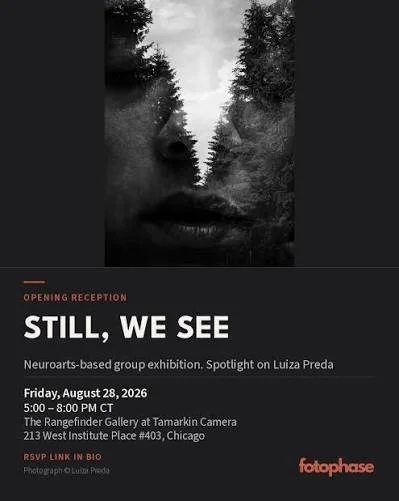
One of my works was selected for the Still, We See exhibition, which is part of the I CAN’T SEE project created back in 2017
Still, We See - Photography, Wellbeing and a New Way of Seeing
This history is part of what makes Fotophase so interesting to look closer:
Fotophase is an initiative exploring the relationship between photography, wellbeing and health, and Still, We See is its debut exhibition at The Rangefinder Gallery at Tamarkin Camera in Chicago. Bringing together photographers with different perspectives and practices, the exhibition asks us to consider photography not only as an art form or a way of documenting the world, but also as a creative experience that can affect how we feel, connect and see.
For me, this creates a beautiful connection between the history of photography we have just explored and the work I have been developing through Creative Harmony since 2023. Creative Harmony grew from my own curiosity about what happens when photography becomes more than taking a picture. Through photography walks, creative exercises and art-for-wellbeing activities, I explore how making images can encourage attention, self-expression, connection and a different way of experiencing our environments.
This is not photography as therapy. It is photography as a creative and reflective art practice that can support wellbeing.
What a moment to be alive!
I find it exciting that we are now developing new ways of researching something artists and communities have experienced for generations: that creative experiences, such as photography, can affect us much deeper than it looks like at a first glance.
We don't need neuroscience to give art permission to matter.
But perhaps neuroscience, health research and the emerging field of neuroarts can help us understand why it matters.
And I am very happy to be part of that conversation through Still, We See photography exhibition.
The exhibition is on view at The Rangefinder Gallery at Tamarkin Camera in Chicago until September 30, 2026. Welcome!
If you would like to read more about my own relationship with photography, you can also visit Fotophase website and read one of the Fotophase stories, “A Slower Life Through Photography.”
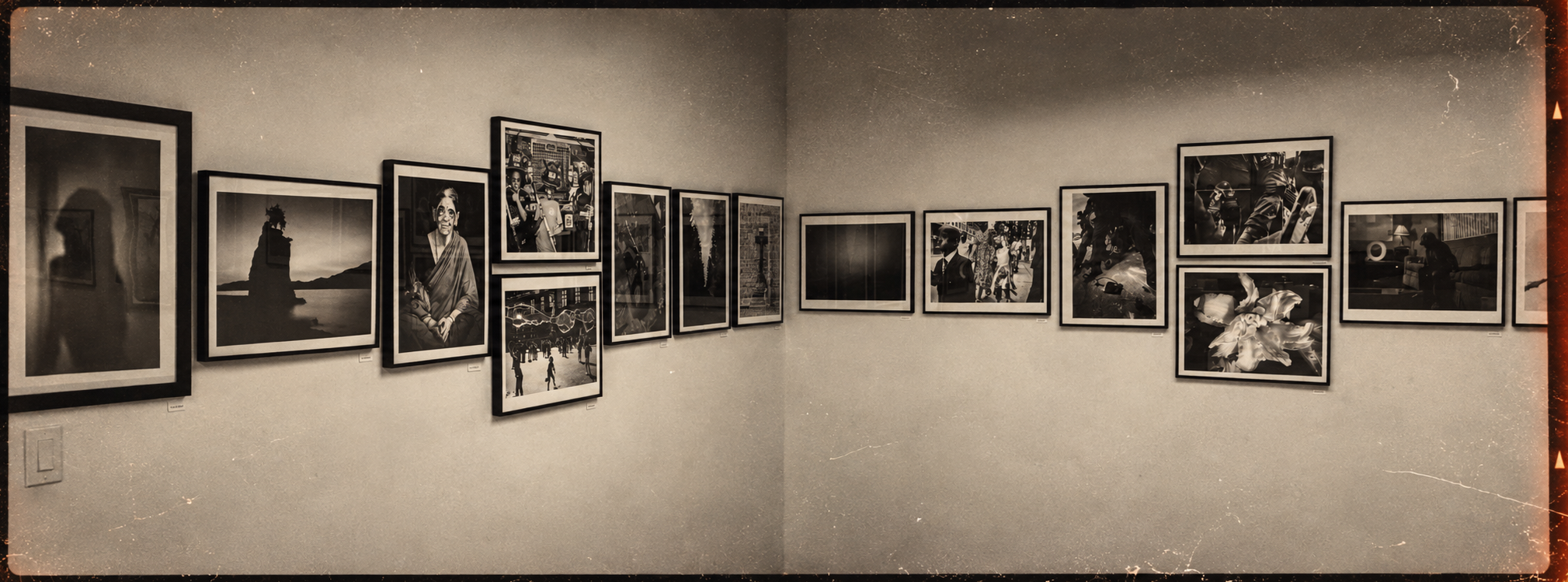
A second sneak peek into the Still, We See exhibition at Tamarkin Camera Gallery in Chicago, USA. If you are in Chicago or are planning to travel there, you’re welcome to visit us!
With gratitude
I would like through this little blog article to also thank FotoPhase for bringing this conversation into the gallery space, and everyone who made Still, We See project possible!
A warm thank you to Fotophase team, including Kiran Karnani, James Rice and Dr. Gene Beyt and special thank you to all the photographers whose work came together with my work for this exhibition:
Gajan Balan, Katerina Benzova, Dr. Ahmad Beyh, Dr. Gene Beyt, Mathieu Bitton, Sheila Pree Bright, RJ Clarke, Mark de Paola, Jaime Fernandez, Greg Hatton, John Hendrick, Terry La Rue, Mark Mann, Tyson Martin, Cheriss May, Dr. Daniel Potts, James Rice, Ann Rosen, Brandon Ruffin, Kylie Shea, Juan Carlos Torres, Eva Woolridge, and Torrance York.
I am grateful to be part of this group and to share a space where photography through a new lens!
Thank you to FotoPhase, The Rangefinder Gallery at Tamarkin Camera, and all the artists who helped make Still, We See possible!
Follow us on Instagram!
https://www.instagram.com/creativeharmonywithluiza/
https://www.instagram.com/fotophase.neuroarts/
Sources
Boccia, M., Barbetti, S., Piccardi, L., Guariglia, P., & Ferlazzo, F. (2016). Where does brain neural activation in aesthetic responses to visual art occur? A meta-analytic review. Neuroscience & Biobehavioral Reviews, 60, 65–71. https://doi.org/10.1016/j.neubiorev.2015.09.009
Buchan, C. A. (2020). Therapeutic benefits and limitations of participatory photography for adults with mental health problems: A systematic search and literature review. Journal of Psychiatric and Mental Health Nursing, 27(5), 657–668.
Centre for British Photography. (n.d.). Jo Spence. Centre for British Photography
Dennett, T. (2010). Jo Spence's camera therapy: Personal therapeutic photography as a response to adversity. European Journal of Psychotherapy & Counselling, 12(1), 55–71. https://doi.org/10.1080/13642530902723041
FotoPhase. (2026, April 21). A slower life through photography. FotoPhase — A Slower Life Through Photography
Judy Weiser. (n.d.). PhotoTherapy techniques. PhotoTherapy Centre. PhotoTherapy Centre
Langford, M. (2019). Photographic acts and arts of memory. In S. Bull (Ed.), A companion to photography. Wiley. https://doi.org/10.1002/9781118598764.ch5
National Portrait Gallery. (n.d.). Photo therapy: Crone from the series Triple Somersaults 2, Jo Spence. National Portrait Gallery — Jo Spence
NeuroArts Blueprint. (n.d.). About the NeuroArts Blueprint. NeuroArts Blueprint
Read, R. K., Mason, O. J., & Jones, C. J. (2023). A randomised controlled trial exploring the impact of a photography intervention on wellbeing and posttraumatic growth. Arts & Health, 15(3), 275–291.
Saita, E., & Tramontano, M. (2018). Navigating the complexity of the therapeutic and clinical use of photography in psychosocial settings: A review of the literature. Research in Psychotherapy: Psychopathology, Process and Outcome, 21(1). https://doi.org/10.4081/ripppo.2018.293
Tamarkin Camera. (n.d.). The Rangefinder Gallery. The Rangefinder Gallery at Tamarkin Camera
The Metropolitan Museum of Art. (n.d.). Hugh Welch Diamond. The Metropolitan Museum of Art — Hugh Welch Diamond
Wetzler, S. (2021). Hugh Diamond, the father of psychiatric photography – psychiatry in pictures. The British Journal of Psychiatry, 219(2), 460–461. https://doi.org/10.1192/bjp.2021.27
Wheeler, M. (2009). Photo-psycho-praxis. European Journal of Psychotherapy & Counselling, 11(1), 63–76. https://doi.org/10.1080/13642530902745812
